Women's economic opportunity is an important part of community development. Access to practical skills, appropriate equipment, and business knowledge can help individuals explore ways to support themselves and participate more fully in their local economies. For donors researching a women's livelihood NGO in Punjab, the important question is not simply what equipment an organization distributes. It is whether a proposed activity responds to an identified need and has a practical plan for follow-up.
Helping Hands for Asia Foundation, a Section 8 nonprofit based in Ludhiana, Punjab, includes women's empowerment and livelihood development among its charitable focus areas. Its published work offers an example of how a relatively small form of practical assistance can become part of a broader conversation about economic opportunity.
A documented tailoring livelihood project in Ludhiana
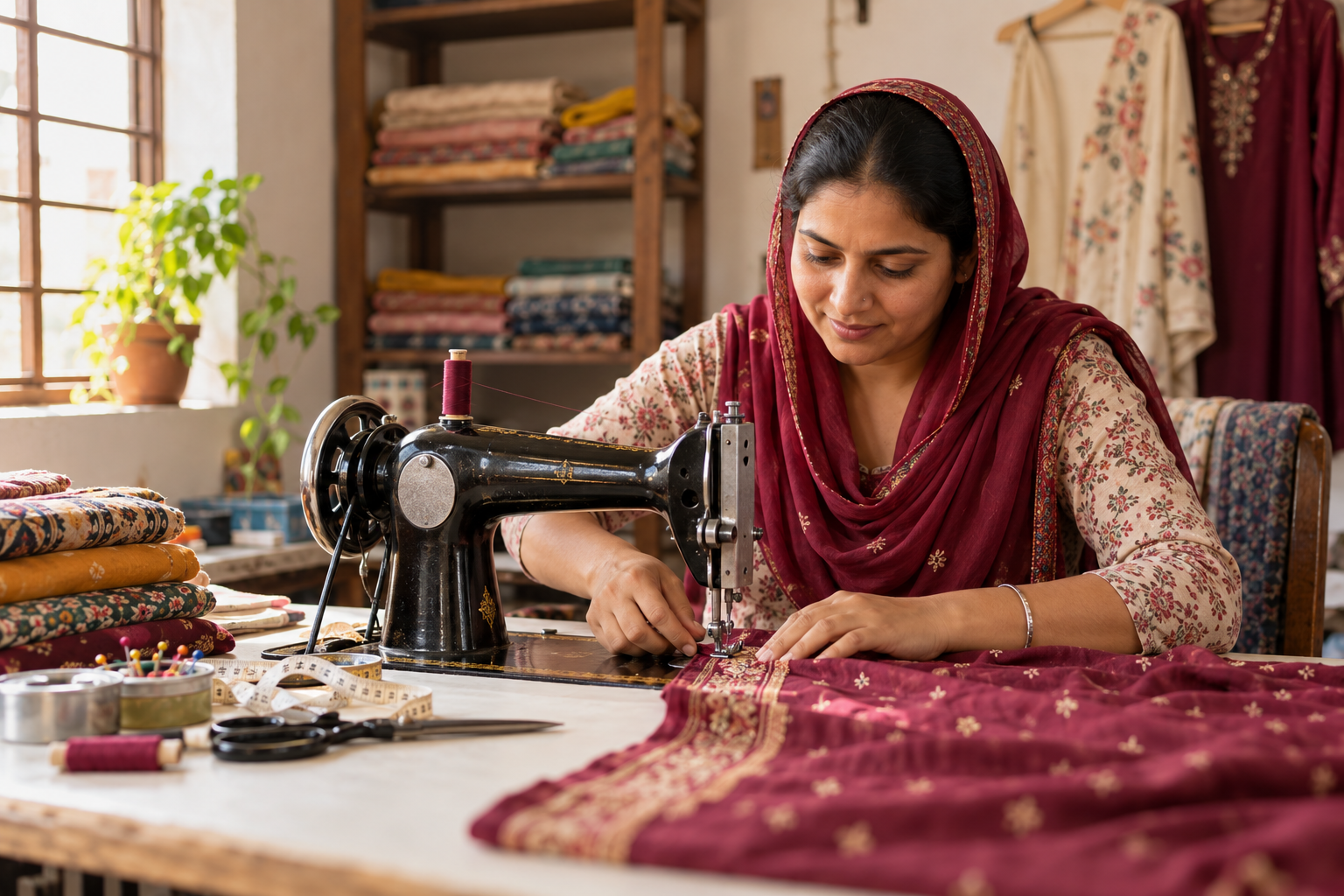
Helping Hands for Asia Foundation's completed-project record describes a women's tailoring livelihood initiative in Ludhiana. According to the foundation, the activity involved providing a sewing machine and startup assistance to help a woman establish a tailoring business.
This is a reported completed assistance activity. The published record does not establish the recipient's subsequent earnings, how long the business operated, or whether a wider tailoring program is currently enrolling participants. Those distinctions matter. Providing equipment is a documented output, while sustained economic outcomes require further evidence.
The project provides a useful starting point for considering how future livelihood initiatives could be designed, supported and evaluated.
Why livelihood support involves more than equipment
A sewing machine may be an essential tool for a tailoring business, but equipment alone cannot establish that the business will become sustainable. A person planning a small enterprise may also need access to suitable training, maintenance arrangements, materials, customer information, pricing knowledge and basic recordkeeping.
The International Labour Organization emphasizes these practical business skills in its Start and Improve Your Business approach. The program covers developing business ideas, preparing a business plan and improving management practices. Its entrepreneurship resources also highlight the importance of adapting support to the needs of women and small-business owners.
These principles can inform responsible nonprofit planning without implying that Helping Hands for Asia Foundation operates an ILO program or has an ILO partnership.
Women’s skills development in Punjab
The foundation's women’s livelihoods program page identifies several areas of interest, including tailoring and embroidery, food processing, handicrafts, beauty and wellness, organic farming, adult education and leadership. These are stated program focus areas. They should not be interpreted as confirmation that each course or training activity is currently available.
For a future project, the appropriate skill would depend on local demand, participants' interests, the availability of qualified trainers and the resources needed for implementation. A proposed tailoring initiative, for example, would benefit from understanding whether participants want to produce garments, offer alterations or explore other services. A food-processing initiative would require a different set of practical, safety and business considerations.
Effective livelihood planning begins with listening to the people who may participate, rather than deciding what they need without their involvement.
What should donors look for in a livelihood project?
Prospective donors and grantmakers can assess a proposed project by considering five areas:
- Community need: Is there evidence that participants want the proposed support and that it addresses a practical barrier?
- Project resources: Are the proposed equipment, training, materials and other costs clearly documented?
- Participant involvement: Have prospective participants had an opportunity to express their preferences and understand the proposed activity?
- Implementation and safeguards: Who will coordinate delivery, maintain records, protect personal information and address problems?
- Outcome evaluation: How will the organization distinguish completed activities from longer-term changes, such as continued use of equipment or progress toward business goals?
A well-designed monitoring approach does not need to make exaggerated claims. It can report what was delivered, what remains uncertain and which lessons might improve future projects.
Donors should also respect participants' privacy. Photographs, personal stories and financial information should only be shared with appropriate permission.
The role of nonprofit grants and community partnerships
Women’s livelihood initiatives may benefit from cooperation among local organizations, qualified trainers, community groups and potential funders.
For organizations exploring an NGO partnership in Punjab, a proposed memorandum of understanding can clarify responsibility for training, equipment, project records and financial oversight. A grant proposal might describe the community need, project objectives, available resources, implementation arrangements and an appropriate evaluation plan.
These are possible planning approaches, not announcements that Helping Hands for Asia Foundation has received a new grant or launched a new funded training program. The foundation’s partnership page provides information for organizations interested in discussing potential collaboration. Any arrangement would depend on mutual agreement, available capacity and applicable requirements.
How can the Punjabi diaspora support responsible livelihood development?
Members of the international Punjabi community may be interested in sharing entrepreneurship knowledge, connecting potential trainers, exchanging project-planning ideas or discussing appropriate nonprofit collaboration.
Financial contributions involve separate regulatory requirements. Under guidance published by India's Ministry of Home Affairs, a non-resident Indian who remains an Indian citizen and contributes personal savings through normal banking channels is distinguished from a person of Indian origin who holds foreign citizenship, including an OCI/PIO cardholder. Contributions from foreign citizens may constitute foreign contribution under FCRA.
An Indian organization must have the applicable registration or specific prior permission and meet the designated receipt-account requirements before accepting regulated foreign contributions. The foundation's current FCRA permission has not been independently verified. Accordingly, this article does not invite overseas remittances or provide foreign-contribution payment instructions.
A note about donation tax documentation
Donors considering a tax-deductible donation in India should verify the foundation's current approval and their individual eligibility. Under the earlier Income-tax Act, Sections 12A/12AB concerned the charitable institution's income-tax exemption framework. Section 80G concerned potential deductions for eligible donors.
An eligible deduction reduces taxable income, not tax owed directly, and is not a tax credit or a replacement for government tax. The applicable legislation changed on April 1, 2026. Under the default new tax regime, ordinary charitable donation deductions are generally unavailable. Deduction categories and limits vary; cash donations exceeding ₹2,000 and in-kind donations do not qualify for the monetary donation deduction.
Donors should obtain the official receipt and Form 10BE where applicable for earlier-law donations, or the appropriate documentation under current law. The foundation's present approval validity and deduction category should be verified before any claim. This information is general education, not professional tax advice.
Exploring support for future livelihood initiatives
Helping Hands for Asia Foundation's published project information includes a completed tailoring livelihood assistance activity, while its broader women's empowerment program describes additional areas of potential skills development. Prospective supporters should distinguish between those completed activities and proposals that may require further planning, partners or resources.
Anyone interested in learning about the foundation's current priorities can review its official website information, request details of any available livelihood initiative and ask for the appropriate documentation before making a financial decision. The project-support inquiry page provides a contact route for inquiries. It does not itself process a payment or complete a donation.
Building opportunity through practical planning
Women's livelihood support is most meaningful when activities are relevant to participants, resources are carefully managed and outcomes are reported accurately.
The foundation's documented Ludhiana tailoring assistance illustrates one form of practical support. Its wider ambitions in skills and economic opportunity represent areas for future development rather than guaranteed active services.
For donors, nonprofits and potential partners, responsible collaboration begins with understanding what has been accomplished, what still needs to be planned and how a proposed initiative could be assessed.
Learn more
Review the foundation’s current program information and use the official inquiry page to ask about confirmed livelihood priorities.
Visit the project-support inquiry page